
Many people search for encuentra el ritmo in english because they want to understand the exact meaning of this popular Spanish phrase. Although the direct translation is simple, the expression often carries a deeper message depending on the situation. It appears in music, sports, motivational conversations, and everyday speech, making it a useful phrase for both beginners and advanced Spanish learners.
Learning encuentra el ritmo in english is valuable because it helps you understand not only vocabulary but also cultural context. Native speakers frequently use this expression to encourage someone to become comfortable, confident, or naturally successful in an activity. By understanding when and how the phrase is used, English speakers can communicate more naturally and appreciate the richness of everyday Spanish expressions.
What Does Encuentra El Ritmo Mean in English?
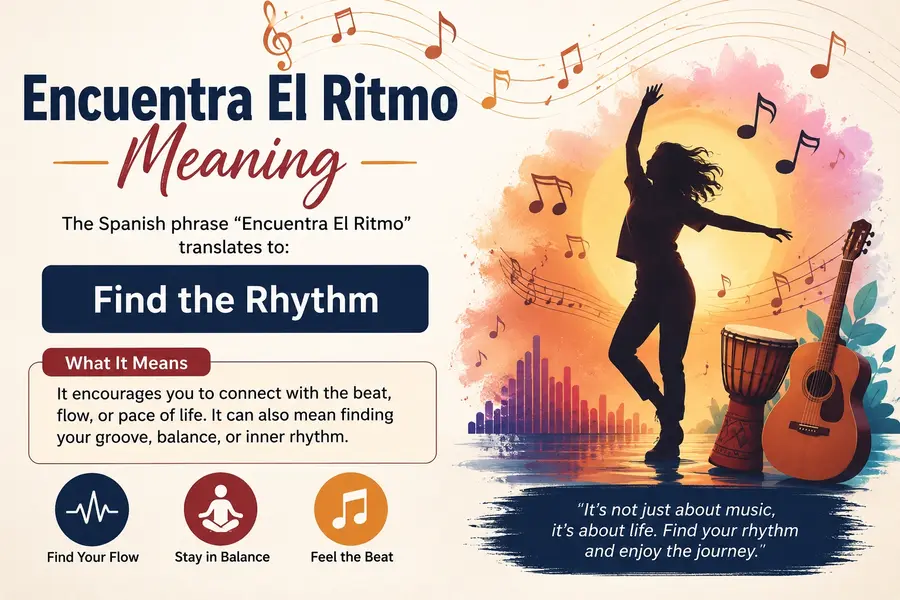
The most accurate translation of encuentra el ritmo in english is “Find the Rhythm.” The verb “encuentra” means “find,” while “el ritmo” translates directly as “the rhythm.” Together, these words create a phrase that encourages someone to discover the correct timing, flow, or pace. It is easy to remember because each word has a straightforward English equivalent that reflects its original Spanish meaning.
While “Find the Rhythm” is the literal translation, it is not always the best choice in every conversation. Depending on the context, English speakers may naturally say “Find Your Rhythm,” “Find Your Groove,” or “Find Your Pace.” These alternatives preserve the original message while sounding smoother in everyday English. Understanding these variations helps learners translate Spanish more accurately in different situations.
Breaking Down the Phrase
To fully understand encuentra el ritmo in english, it helps to examine each word separately. The word “encuentra” comes from the Spanish verb “encontrar,” which means “to find” or “to discover.” It is commonly used when encouraging someone to locate something, solve a problem, or achieve a goal. This makes the first part of the phrase positive and action-oriented.
The second part, “el ritmo,” means “the rhythm,” but rhythm is not limited to music alone. It can describe the pace of daily life, work, exercise, learning, or personal growth. When combined, the phrase becomes much more than a simple instruction. It inspires people to find balance, confidence, and consistency in whatever they are doing, making it a meaningful expression in many different settings.
How to Use Encuentra El Ritmo in Everyday Conversations
One of the reasons encuentra el ritmo in english is so popular is its flexibility. In music, teachers often encourage students to “find the rhythm” before focusing on speed or difficult techniques. Dancers also hear this expression while learning choreography because keeping the correct rhythm is essential for a smooth and confident performance. The phrase motivates learners to stay patient and practice consistently.
Outside music, the phrase is frequently used in sports, education, business, and personal development. A coach may encourage an athlete to find a comfortable pace during a race, while a manager may use the expression to support a new employee adapting to a busy workplace. Friends may also use it when someone is adjusting to a new routine or learning a new skill. This broad usage makes the phrase practical and memorable for Spanish learners.
Example Sentences with English Translation
Understanding encuentra el ritmo in english becomes much easier when you see the phrase used in real-life examples. A music teacher might say, “Encuentra el ritmo antes de tocar la canción completa,” which translates to “Find the rhythm before playing the entire song.” This sentence reminds students to master timing before focusing on speed or difficult musical techniques, helping them perform with greater confidence and accuracy.
The phrase also appears in everyday conversations outside music. Someone encouraging a friend might say, “No te preocupes, pronto encontrarás el ritmo,” meaning “Don’t worry, you’ll find your rhythm soon.” In English, similar expressions include “You’ll get the hang of it,” “You’ll find your pace,” or “You’ll settle into a routine.” These examples demonstrate how the phrase naturally fits different situations while keeping its encouraging message.
Common Mistakes and Translation Tips
One common mistake when translating encuentra el ritmo in english is using only the literal translation without considering the context. Although “Find the Rhythm” is grammatically correct, it may sound unusual in conversations about work, sports, or daily life. In those situations, phrases like “Find Your Pace,” “Find Your Groove,” or “Get into the Flow” sound much more natural to native English speakers.
Pronunciation is another area where learners often need practice. The phrase is commonly pronounced as “en-KWEN-trah el REET-moh.” Listening to native speakers and repeating the phrase several times can improve pronunciation and confidence. Practicing complete sentences instead of individual words also helps learners understand natural speech patterns and remember the expression more effectively in everyday conversations.
Similar Spanish Expressions
Spanish includes many expressions that are closely related to encuentra el ritmo in english. One popular variation is “Encuentra tu ritmo,” which means “Find your rhythm.” Other useful expressions include “Sigue el ritmo,” meaning “Keep the rhythm” or “Keep up,” and “Mantén el ritmo,” which translates to “Maintain the pace.” Each phrase carries a slightly different meaning depending on the conversation.
Learning related expressions expands vocabulary and improves communication skills. These phrases appear regularly in music lessons, fitness classes, motivational speeches, and casual conversations. By understanding how they differ, learners become more confident when speaking Spanish and choosing the most natural English translation. Recognizing these subtle differences also helps avoid awkward or overly literal translations in everyday situations.
Conclusion
Understanding encuentra el ritmo in english involves much more than translating two Spanish words. While the literal meaning is “Find the Rhythm,” the phrase often represents discovering confidence, balance, timing, or the right pace in life. Whether it is used in music, sports, education, or personal growth, the expression always encourages progress through patience, practice, and consistency rather than speed alone.
For anyone learning Spanish, mastering common expressions like this is an excellent way to improve vocabulary and cultural understanding. Instead of memorizing only direct translations, focus on how native speakers actually use the phrase in different contexts. Doing so will help you communicate naturally, understand conversations more easily, and appreciate the richness of the Spanish language in everyday life.
FAQs
What does Encuentra El Ritmo mean in English?
The direct translation is “Find the Rhythm.” Depending on the context, it can also mean “Find Your Rhythm,” “Find Your Pace,” or “Find Your Groove.”
Is “Find the Rhythm” always the best translation?
Not always. While it is the literal translation, phrases like “Find Your Pace” or “Find Your Groove” often sound more natural in English conversations about work, sports, or personal development.
How do you pronounce Encuentra El Ritmo?
It is commonly pronounced as “en-KWEN-trah el REET-moh.” Listening to native speakers is the best way to improve pronunciation.
Can the phrase be used outside of music?
Yes. It is widely used in sports, education, business, and daily life to encourage someone to become comfortable, confident, or productive.
Why should I learn this Spanish expression?
Learning common phrases like encuentra el ritmo in english helps improve vocabulary, strengthens conversational skills, and provides a better understanding of how native Spanish speakers express ideas in everyday situations.
You May Also Read: Whistleblew Bird